


Former Chief Minister of the Northern Province and retired Supreme Court Judge Justice C. V. Wigneswaran has strongly disagreed with recent remarks made by Mr. Dilith Jayaweera, Member of Parliament, who stated that Provincial Councils are unsuitable for Sri Lanka.
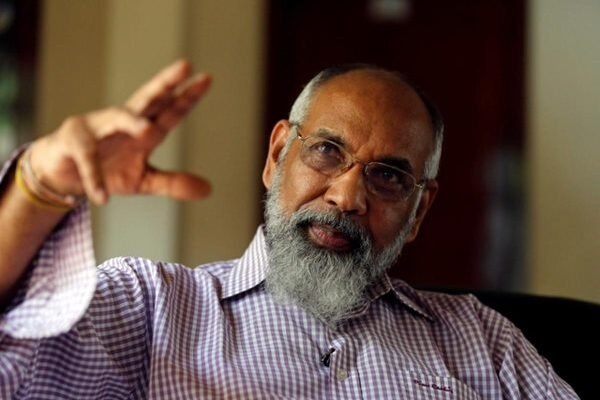
Justice Wigneswaran stated that while he holds great respect for Mr. Jayaweera as a senior Attorney-at-Law and leading businessman, the statement reflects a failure to appreciate the historical, political, and constitutional reasons that led to the establishment of Provincial Councils.
Nationalism Must Be Understood Correctly
Justice Wigneswaran noted that Mr. Jayaweera’s position is rooted in Sinhala nationalism, just as Tamil political positions are rooted in Tamil nationalism. While every community has the right to advocate for its own interests, he stressed that Sinhala nationalism cannot be equated with the entirety of the Sri Lankan nation.
“The Sinhala nation does not encompass the whole Island,” he stated.
North and East as Historical Tamil Areas
The North and East of Sri Lanka have been Tamil-speaking regions long before the arrival of Buddhism and well before the Sinhala language evolved during the 6th and 7th centuries AD, Justice Wigneswaran said.
Citing historian Professor K. Indrapala, he pointed out that Tamil-speaking people have lived in Sri Lanka for over 3,000 years. The 1987 Indo–Sri Lanka Accord explicitly recognizes the Northern and Eastern Provinces as areas of historical habitation of Sri Lankan Tamil-speaking peoples.
Purpose of the Provincial Council System
Justice Wigneswaran emphasized that Provincial Councils were not created for the benefit of the Sinhala-majority regions, but were introduced as a constitutional mechanism to enable self-governance for the Tamil people of the North and East within a unitary framework.
Key elements of the Indo–Sri Lanka Accord included:
- Devolution of power to the provinces through the 13th Amendment
- Establishment of Provincial Councils with internal self-governing powers
- Recognition of Tamil as an official language
- Temporary merger of the Northern and Eastern Provinces pending a referendum
He noted that Provincial Councils were later extended island-wide by President J. R. Jayewardene primarily to reassure Sinhala hardliners that Tamils were not receiving exclusive constitutional concessions.
Policies That Destroyed Coexistence
Justice Wigneswaran recalled that Tamil faith in a united Sri Lanka collapsed following a series of state actions, including:
- The Sinhala Only Act
- The 1958 riots
- Repeated anti-Tamil pogroms culminating in the 1983 racial riots
- Discriminatory education policies, particularly the 1971 university standardization scheme
Quoting historian Professor K. M. de Silva, he highlighted that Tamil students were required to obtain significantly higher marks than Sinhalese students for admission to medical and engineering faculties, even when examinations were sat in the same language.
“This policy was a decisive factor that pushed Tamil youth towards armed resistance,” he said.
International Law and the Right to Self-Determination
Justice Wigneswaran stressed that Sri Lanka is a State Party to the International Covenant on Civil and Political Rights (ICCPR), whose Article 1 guarantees the right of self-determination to all peoples.
The UN Human Rights Committee has clarified that this right belongs to peoples as a collective, not to individuals. The Tamil-speaking people of the North and East clearly constitute a people within the meaning of Article 1, he said.
Provincial Councils Must Remain Until a Better Alternative Exists
Justice Wigneswaran acknowledged that the existing Provincial Council system does not provide genuine self-government to the Tamil people of the North and East. However, he warned that abolishing Provincial Councils without establishing an alternative constitutional arrangement would completely strip Tamil people of even minimal self-governing safeguards.
“The demand to abolish Provincial Councils appears aimed at eliminating every constitutional trace of Tamil self-governance and neutralizing India’s role under the Indo–Sri Lanka Accord,” he said.